Sensor data platform
Hardware-timestamped ingest, synchronisation and versioning of LiDAR, radar, ultrasonic and camera streams, with per-vehicle calibration records.

A modular platform for sensor-data ingest, calibration, multimodal fusion, model training, optimisation and on-vehicle inference.
Development vehicle, sensor suite
The platform provides defined interfaces for data ingest, calibration, fusion, model training, optimisation and on-device inference.
Ingest and synchronise LiDAR, radar, ultrasonic and camera streams with per-vehicle calibration.
Align every modality to one coordinate frame and time base, then fuse into a shared representation.
Train perception and planning models on the fused representation, adapted to each sensor set.
Compile, quantise and run the model on the automotive SoC inside a fixed budget.
The pipeline runs on your infrastructure or ours. Training happens in a data centre; inference happens on the vehicle.
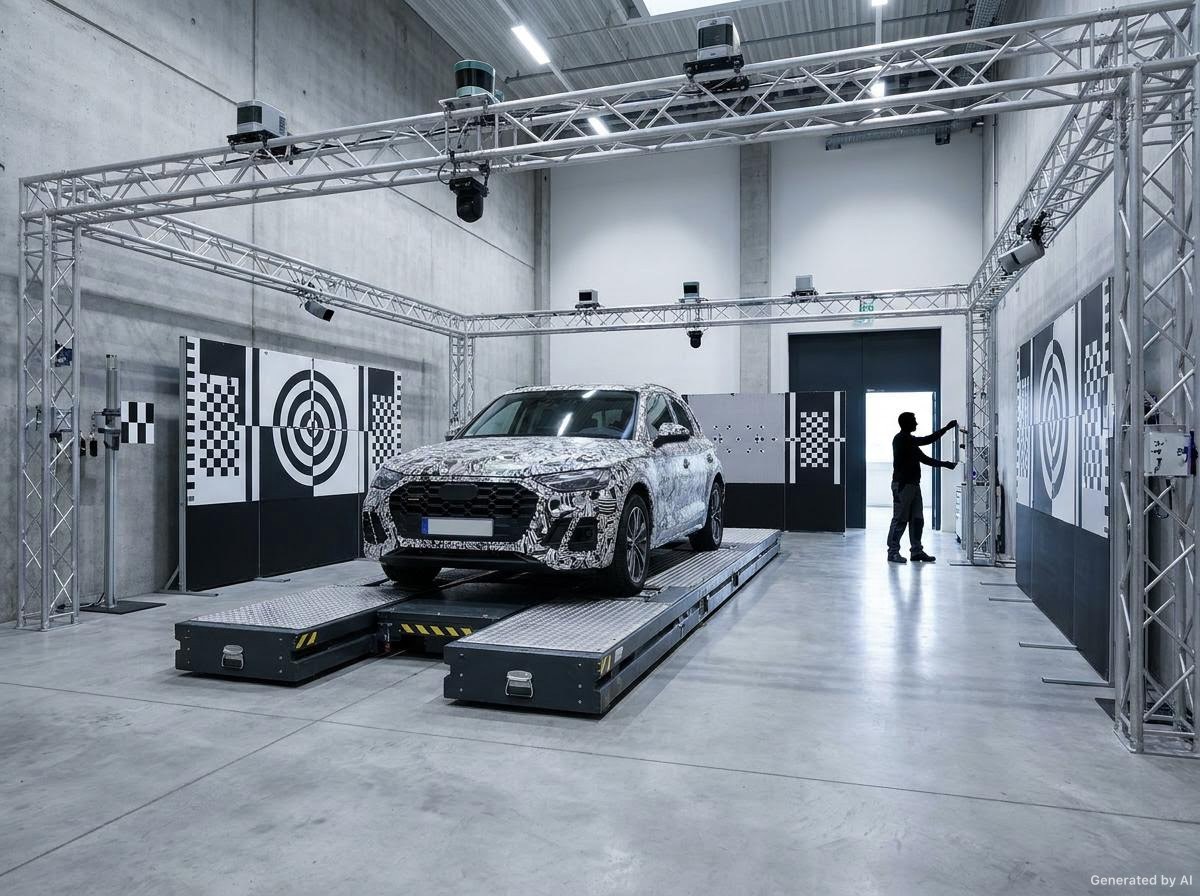
The platform provides an integrated workflow from sensor-data management through model deployment and evaluation.
Hardware-timestamped ingest, synchronisation and versioning of LiDAR, radar, ultrasonic and camera streams, with per-vehicle calibration records.
Intrinsic and extrinsic calibration, temporal alignment and drift monitoring, producing one spatial representation the model can consume.
Perception and planning models trained on the fused representation and adapted to your sensor configuration.
Quantisation, distillation, pruning and hardware-aware tuning for the automotive SoC in the vehicle.
Deterministic inference, real-time scheduling and safety-bounded planning and control.
Scenario simulation, regression suites and dataset versioning that keep results comparable across model revisions.
Operational requirements are measured on the production stack and defined for sensor input, calibration, fusion, training, export and on-device inference.
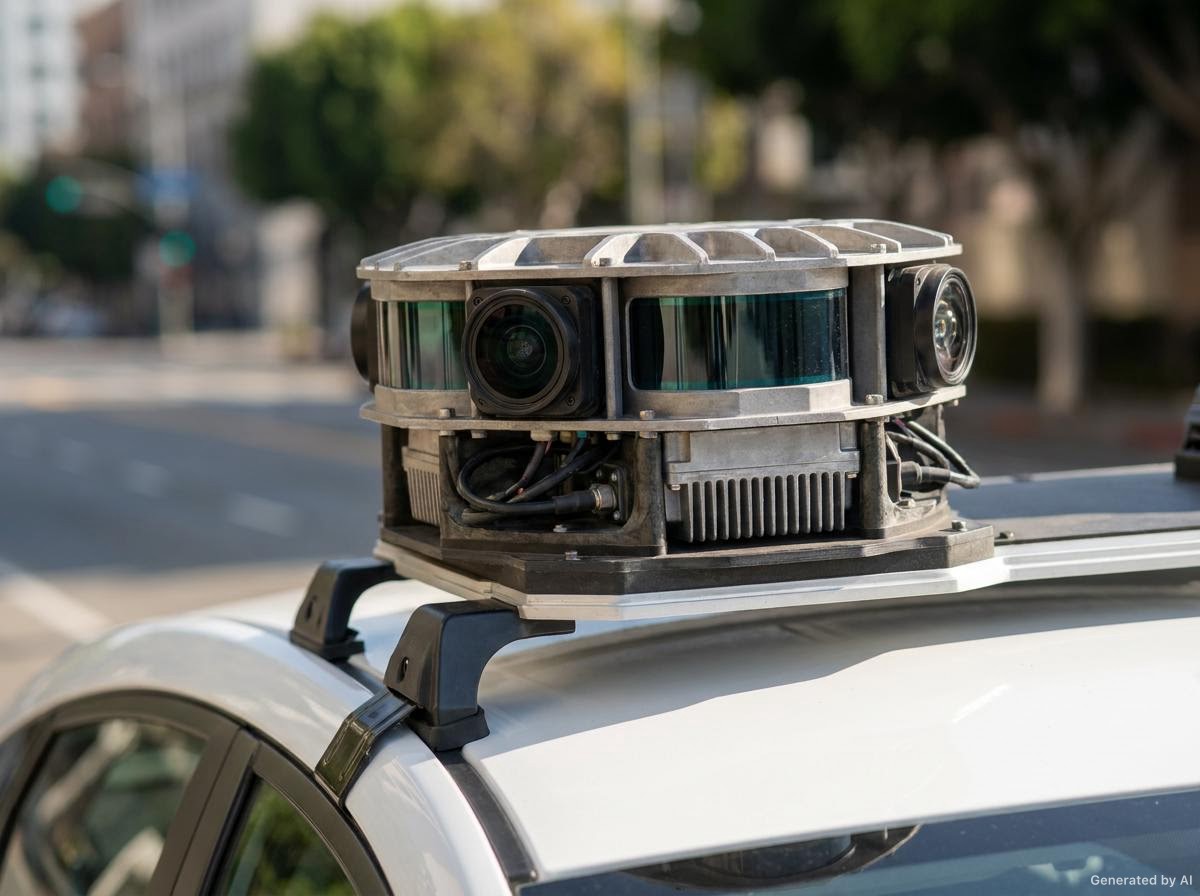
LiDAR, radar, ultrasonic and camera data are calibrated per vehicle and aligned to a common coordinate frame and time base before model training.
Fusion is performed in a shared spatio-temporal representation, with sensor configuration changes managed through calibration and dataset versioning.
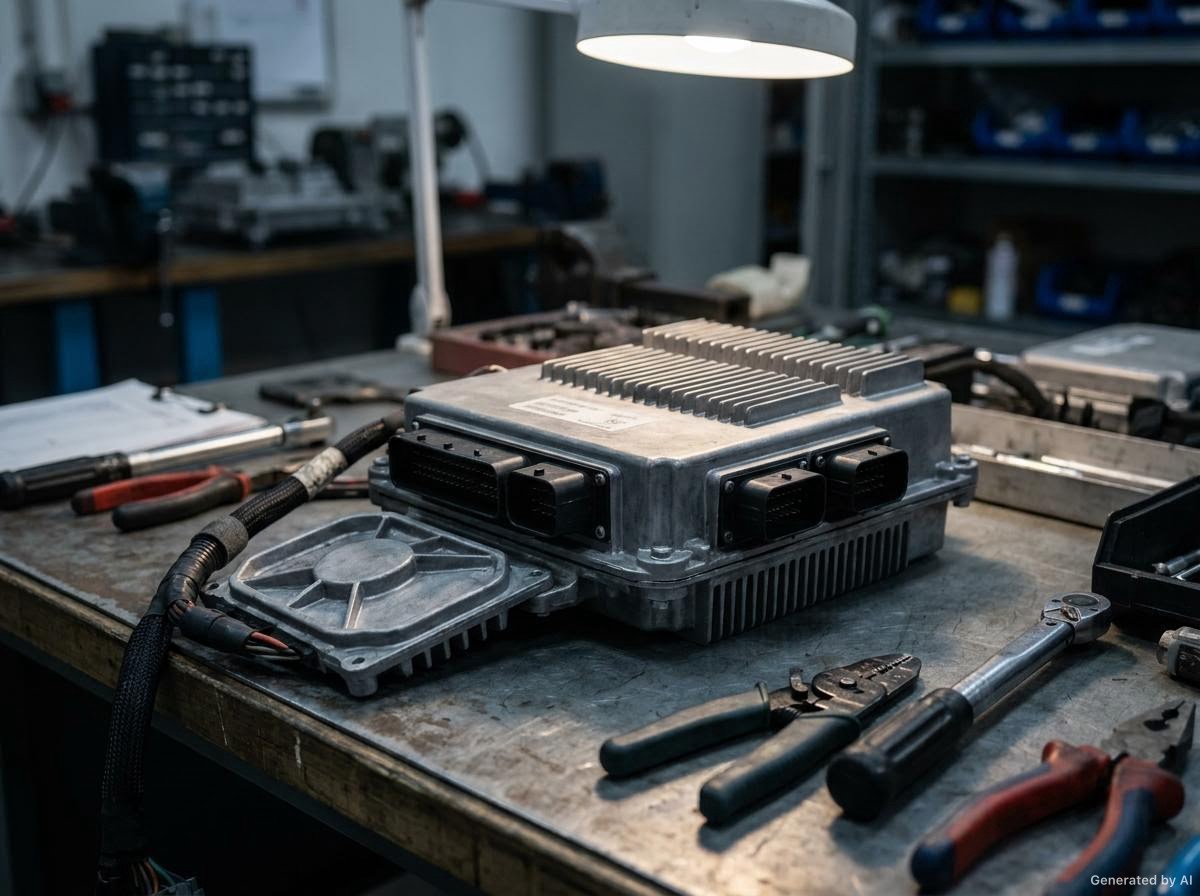
Training and data processing run in public cloud, private cloud, on-premise or edge environments; quantised inference models run on the vehicle.
Elastic training and data processing on managed infrastructure, for programmes that start quickly.
Inside your network, under your data-governance and access-control regime.
Regional processing close to where data is collected, keeping transfers bounded.
The quantised model and runtime on automotive compute, inside the latency and power budget.
The review covers sensor configuration, calibration requirements, target automotive compute, deployment constraints and initial scope.